
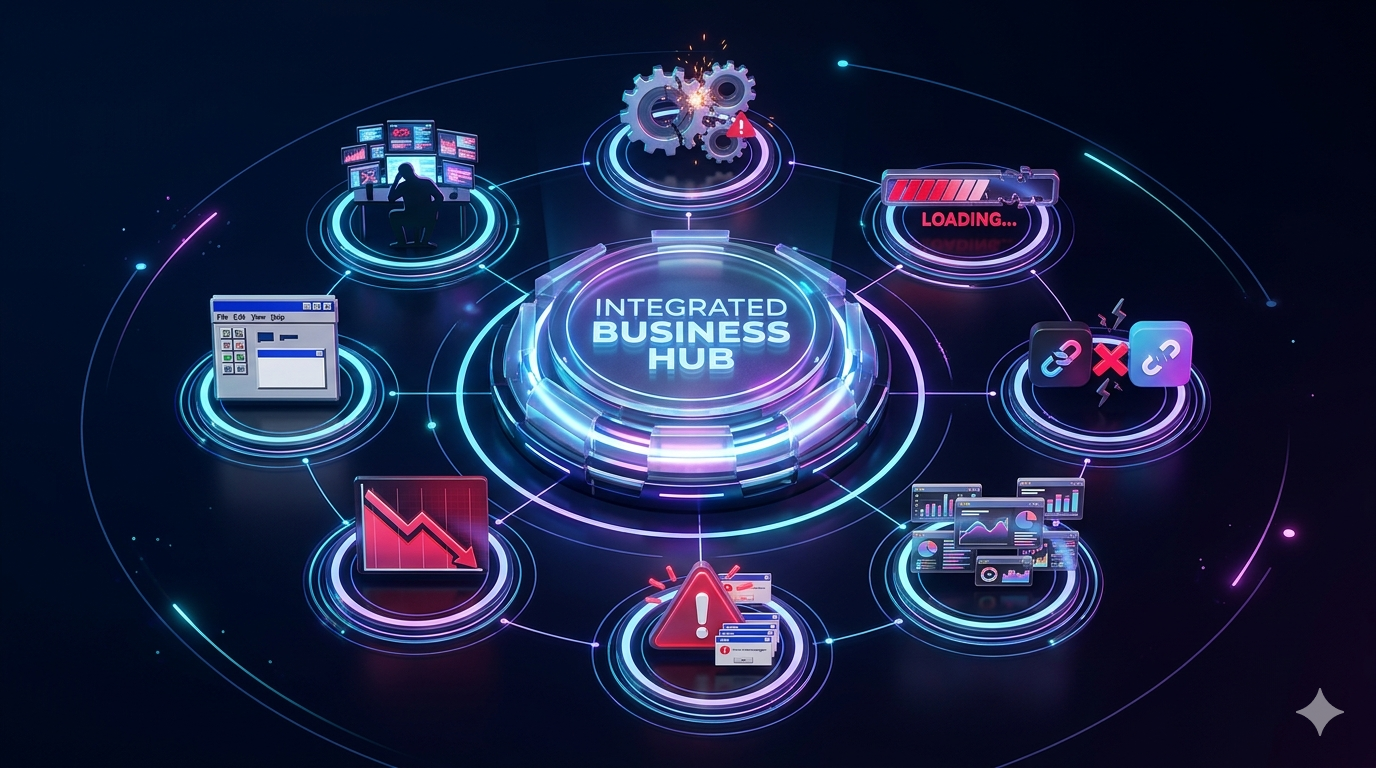
The transition from a fledgling startup to a scaling enterprise is often marked by a paradoxical struggle: the very systems that once facilitated your initial success slowly begin to act as anchors. In the fast-paced digital economy, the infrastructure you rely on for daily operations must do more than just function; it must provide a competitive advantage. When your current business tools no longer align with your operational scale or market demands, the resulting friction creates invisible costs that bleed into every department.
Understanding the health of your digital ecosystem is vital because technical debt and procedural bottlenecks are rarely obvious until they cause a significant failure. Many leaders find themselves managing the limitations of their software rather than focusing on strategic expansion or client satisfaction. This guide is designed to help you recognise the subtle indicators of systemic decay. By auditing your existing business tools, you can transition from a reactive posture to a proactive strategy that leverages technology as a catalyst for sustainable growth and operational excellence.
The Hidden Cost of Manual Data Entry and Duplication
One of the most immediate indicators that your business tools are insufficient is the persistent need for manual data entry across multiple platforms. In an ideal digital environment, data should flow seamlessly from one touchpoint to another. When your team is forced to copy information from a CRM into an invoicing tool, or manually update spreadsheets to reflect website sales, you are experiencing a breakdown in integration.
This manual intervention is not merely a nuisance; it is a significant risk factor for human error. A single typo in a client’s contact details or a misplaced decimal point in a financial report can lead to cascading issues that take hours to rectify. Furthermore, the time spent on these repetitive tasks represents a substantial opportunity cost. Every hour a skilled employee spends on data entry is an hour they are not spending on high-value activities like lead generation or creative problem-solving.
To resolve this, modern enterprises are increasingly turning to business productivity tools that offer native integrations or robust API capabilities. Centralising your data ensures a “single source of truth,” which is essential for accurate reporting. If your current software forces your staff to act as the human bridge between disconnected systems, it is a clear sign that you have outgrown your current setup and require more modern business tools to maintain your competitive edge.
Declining Employee Morale and Fragmented Communication
We often view software through the lens of functionality, but we must also consider the psychological impact of business tools on the workforce. When employees are constantly battling slow interfaces, frequent crashes, or convoluted workflows, their job satisfaction inevitably plummets. Inefficient systems create a sense of professional frustration, as talented individuals feel their potential is being throttled by inadequate technology.
Communication silos are another byproduct of outdated business tools. If your team relies on a patchwork of personal emails, fragmented chat apps, and physical notes to manage complex projects, critical information will eventually fall through the cracks. This lack of transparency leads to duplicated efforts and missed deadlines, further straining internal relationships.
Providing your team with an integrated suite of business productivity tools fosters a culture of collaboration. When information is accessible and processes are intuitive, employees can focus on the quality of their work rather than the mechanics of the software. Ensuring your internal systems support a fluid exchange of ideas is a cornerstone of Digital Junkieee’s branding philosophy, as a strong internal culture is the foundation of a powerful external brand.
Inability to Scale Operations Without Proportional Hiring
A truly efficient business model should allow for non-linear growth. This means your revenue should be able to increase significantly without requiring a 1:1 increase in headcount. If you find that every new client or project necessitates hiring more administrative staff just to manage the paperwork, your business tools are fundamentally failing to provide scalability.
Scalability is rooted in automation. Many inefficient business systems are built on processes that were designed for a smaller volume of work. As the volume increases, these processes break. For instance, a manual approval process that takes ten minutes might be sustainable for five orders a day, but it becomes a massive bottleneck when you are processing five hundred.
Transitioning to modern business tools allows you to automate these repetitive workflows. By implementing intelligent triggers and automated notifications, you can handle a much larger workload with the same team size. This not only improves your profit margins but also allows your business to respond more rapidly to market opportunities. If your current infrastructure feels like it is bursting at the seams every time you sign a new contract, it is time to reassess your digital strategy.
Lack of Real-Time Insights and Actionable Data
In the modern business landscape, data is the most valuable asset you possess, but only if you can access and interpret it quickly. A major sign that your business tools are holding you back is the inability to generate real-time reports. If your leadership team has to wait until the end of the month for a manual report to be compiled before they can see performance metrics, you are essentially flying blind.
Delayed data leads to reactive decision-making. By the time you identify a dip in lead quality or a spike in customer churn, the damage may already be done. High-performing organisations rely on dashboards that provide a live view of their Key Performance Indicators (KPIs). This allows for immediate pivots and tactical adjustments based on current market conditions.
Modern business tools integrate data analytics directly into the workflow. Whether you are tracking the ROI of your content marketing efforts or monitoring website traffic through SEO services, having this information at your fingertips is vital. If your current systems require a “data specialist” just to extract basic information, you are losing valuable time and insight that your competitors are likely leveraging.
Customer Experience Friction and Slow Response Times
Your clients may not see your internal business tools, but they certainly feel the effects of them. In an era of instant gratification, customers expect rapid responses and seamless interactions. If your customer support team is bogged down by a slow ticketing system or lacks access to a unified customer history, the client experience will inevitably suffer.
Friction in the customer journey often stems from inefficient business systems that don’t communicate with each other. For example, if a client asks about the status of an order and the support agent has to call the warehouse because the software isn’t synced, the delay creates a negative impression. Professionalism is often judged by the speed and accuracy of information delivery.
Investing in high-quality business productivity tools that centralise customer interactions can transform your service levels. A unified view of the customer allows your team to provide personalised, informed support that builds long-term loyalty. Improving these touchpoints is a key aspect of website design, as the user interface should always be backed by robust backend functionality to ensure a smooth end-to-end experience.
Security Vulnerabilities and Compliance Risks
The security landscape is constantly evolving, and outdated business tools are a primary target for cyber threats. Legacy software often lacks the necessary security patches and encryption standards required to protect sensitive client data. If your business is operating on software that is no longer supported by the developer, you are essentially leaving your digital front door unlocked.
Beyond the immediate threat of data breaches, there are significant legal and regulatory risks to consider. With the implementation of strict data protection laws like GDPR, businesses are legally obligated to handle personal information with a high degree of security. Using business tools that do not meet these compliance standards can result in massive fines and irreparable damage to your reputation.
Modern platforms prioritise security by design, offering multi-factor authentication, advanced encryption, and regular automated updates. By migrating to a more secure infrastructure, you protect not only your data but also the trust your clients place in your brand. This commitment to security should be a visible part of your digital marketing strategy, reassuring potential leads that their information is safe with you.
High Maintenance Costs and Frequent Downtime
There is a common misconception that keeping old business tools is a cost-saving measure. In reality, the “total cost of ownership” for legacy systems often far exceeds the price of a modern subscription. These costs manifest in the form of specialised IT support required to keep the system running, custom patches to fix recurring bugs, and the loss of revenue during frequent periods of downtime.
Downtime is particularly destructive for any business that relies on a digital presence. If your primary lead generation engine or internal project management tool goes offline for several hours, the resulting loss in productivity and potential sales can be devastating. Modern cloud-based solutions typically offer 99.9% uptime guarantees, ensuring that your operations remain functional around the clock.
Furthermore, outdated business tools often require expensive on-site hardware that takes up physical space and consumes significant energy. Transitioning to a cloud-native environment reduces these overheads and allows your IT budget to be spent on innovation rather than basic maintenance. For a comprehensive overview of how to streamline these costs, you can visit the Digital Junkieee blog for more insights on operational efficiency.
Difficulty Integrating with New Technologies and Services
The digital world operates on an ecosystem of interconnected services. Your business tools need to be able to “talk” to the other platforms you use, whether that is a social media management tool, an email marketing provider, or a payment gateway. If your current software is an isolated island that cannot easily connect to third-party services, you are severely limited in your ability to adopt new strategies.
This lack of extensibility often forces businesses into a “vendor lock-in” scenario, where they are trapped using subpar services because their core system won’t work with anything else. Modern software is built with an “API-first” mentality, allowing you to plug in the best-of-breed tools for every specific function of your business.
Whether you are looking to enhance your SEO strategy or implement a new content marketing campaign, your underlying infrastructure must support these initiatives. If adding a simple new feature requires weeks of custom coding or a complete system overhaul, it is a definitive sign that your technology stack is no longer fit for purpose. For more guidance on building a flexible digital foundation, feel free to contact Digital Junkieee.
How Digital Junkieee Helps Businesses Achieve Better Business Tools
At Digital Junkieee, we understand that technology should be an enabler, not a barrier. We specialise in helping businesses identify the bottlenecks in their current workflows and implementing the business tools necessary to unlock growth. Our approach is not just about installing software; it is about creating a holistic digital strategy that aligns with your specific commercial goals.
Our team of experts provides comprehensive SEO services that go beyond simple keyword rankings. We look at your entire digital footprint to ensure that your search strategy is supported by high-performing, fast-loading infrastructure. This ensures that the traffic we drive to your site is met with a seamless user experience, increasing your conversion rates and ROI.
In addition to search optimisation, we offer bespoke website design and digital marketing solutions tailored to modern business needs. We help you select and integrate the right platforms to manage your leads, communicate with your team, and measure your success. By partnering with us, you gain access to a dedicated team focused on your branding and long-term digital growth. Explore our full range of services to see how we can transform your operational efficiency.
FAQ Section
What are the primary indicators that my current business tools are outdated?
The most prominent sign that you are using business tools that no longer serve your needs is a measurable decrease in operational speed and an increase in manual workarounds. If your team is frequently complaining about software performance, or if you are unable to generate accurate reports without significant manual intervention, your systems are likely outdated. Other indicators include high maintenance costs, frequent security alerts, and a lack of integration with modern third-party applications. Essentially, if your technology feels like a hurdle you must jump over every day rather than a vehicle that carries you forward, it is time for a digital audit and an upgrade to more modern solutions.
How can I transition to new business tools without disrupting my daily operations?
Transitioning to new business tools requires a phased approach and a well-defined migration strategy. It is rarely advisable to “flip a switch” and change everything overnight. Instead, start by identifying the most critical bottleneck and addressing that first. Conduct a thorough data audit to ensure that your information is clean and structured before moving it to a new platform. Provide comprehensive training for your staff to ensure high adoption rates and reduce frustration. Many businesses find success by running the old and new systems in parallel for a short period to ensure data integrity. Professional guidance during this phase can significantly mitigate the risks of downtime or data loss.
Do small businesses really need advanced business productivity tools?
Small businesses often benefit the most from advanced business tools because they usually have fewer resources and a smaller staff. Automation allows a small team to punch well above their weight, managing customer relationships and marketing campaigns that would typically require a much larger department. Investing in the right technology early on builds a foundation for scalable growth, preventing the “growing pains” that occur when a business outgrows its manual processes. While the initial investment might seem daunting, the long-term gains in efficiency and lead generation typically result in a much higher return on investment than continuing with manual, fragmented systems.
What is the relationship between business tools and digital marketing success?
Your business tools are the engine room that powers your marketing efforts. Even the most sophisticated digital marketing strategy will fail if the underlying systems cannot handle the resulting traffic or lead data. For example, your SEO efforts might bring thousands of visitors to your site, but if your website design is slow or your CRM fails to capture lead information accurately, those efforts are wasted. Furthermore, modern marketing relies heavily on data analytics; without integrated tools to track user behaviour and conversion paths, you cannot optimise your campaigns for maximum ROI. A robust technical stack is essential for any modern marketing initiative.
How often should a company audit its suite of business tools?
In the current technological climate, a comprehensive audit of your business tools should be conducted at least once a year. Technology evolves rapidly, and new solutions emerge that can offer significant improvements in cost or efficiency. An annual review allows you to identify redundant subscriptions, detect security vulnerabilities, and ensure that your software still aligns with your evolving business goals. Additionally, as your company grows, your requirements will change; a system that worked for a team of ten may not be suitable for a team of fifty. Regular audits ensure that your digital ecosystem remains lean, secure, and fully optimised for your current operational scale.
Conclusion
The evolution of a business is inextricably linked to the evolution of its technology. As we have explored in this guide, the signs of decaying infrastructure are often subtle, manifesting as minor frustrations before escalating into significant operational failures. Whether it is the drain of manual data entry, the risk of security breaches, or the inability to scale, the costs of maintaining inadequate business tools are too high to ignore. By remaining vigilant and proactive in your digital strategy, you can ensure that your organisation remains agile and competitive.
Investing in a modern, integrated technical stack is not merely an IT decision; it is a fundamental business strategy. It empowers your employees, delights your customers, and provides the data necessary to lead with confidence. Transitioning to more efficient systems is a journey that requires careful planning and expert execution. At Digital Junkieee, we are committed to helping you navigate this landscape. From refining your branding to implementing comprehensive SEO services, we provide the expertise needed to modernise your operations.
0 Comments