
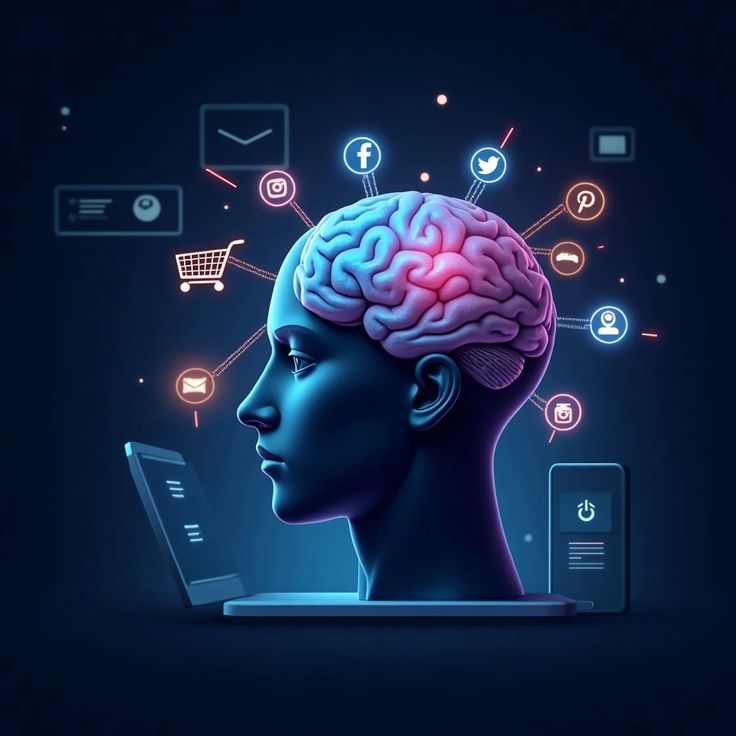
Understanding the mechanics of digital engagement requires a deep dive into the neurological pathways of your audience. Most brands struggle to maintain consistent engagement because they view platforms as mere billboards rather than complex ecosystems of human interaction. The reality is that social media triggers are the invisible architects of the modern digital experience, shaping how users perceive value and when they decide to take action. When a user reaches for their phone subconsciously, they are responding to a sophisticated set of stimuli designed to capture and hold their attention.
As a student of digital strategy, you must recognise that these triggers are not accidental; they are grounded in decades of behavioural science. By mastering the relationship between social media triggers and the human brain, you can transition from a brand that “posts” to a brand that “resonates.” This guide is designed to educate you on the ethical application of these principles, ensuring you build a sustainable connection with your audience. We will examine how social media triggers function as the primary catalyst for user retention and how you can harness this knowledge to improve your brand’s digital footprint through the expert digital marketing strategies provided by Digital Junkieee.
What Are Social Media Triggers?
To begin our journey, we must define exactly what we mean when we discuss social media triggers. In a technical sense, a trigger is a stimulus that sparks a specific reaction or behaviour. In the context of the digital landscape, social media triggers are the specific cues—both external and internal—that prompt a user to open an app, click a notification, or engage with a piece of content. These cues bypass the logical mind and appeal directly to the limbic system, the part of the brain responsible for emotions and survival instincts.
External triggers are the most visible. These include push notifications, the “ping” of a new message, or a brightly coloured icon on a home screen. However, the true power of social media triggers lies in their transition into internal triggers. This occurs when a user begins to associate a specific emotion, such as boredom, loneliness, or anxiety, with the act of checking a social feed. When the phone becomes the “cure” for a negative emotion, the trigger has become deeply embedded in the user’s daily routine.
Understanding this cycle is vital for any professional involved in content marketing. By identifying which social media triggers are most effective for your specific demographic, you can craft messages that feel like a natural solution to their needs rather than an unwanted interruption. This level of insight is what separates basic posting from high-level strategic communication.
The Role of Variable Rewards in Addictive Behaviour
One of the most potent social media triggers is the concept of variable rewards. This principle, famously studied by B.F. Skinner, suggests that a behaviour is more likely to be repeated when the reward for that behaviour is unpredictable. When a user scrolls through a feed, they do not know if the next post will be a boring advertisement or a hilarious video from a friend. This uncertainty creates a dopamine loop, a core component of addictive behaviour.
The anticipation of a reward is often more powerful than the reward itself. In the digital realm, the “pull-to-refresh” mechanism functions much like a slot machine. The physical action combined with the brief delay before new content appears serves as one of the most effective social media triggers in existence. It keeps the user in a state of perpetual “hunting” for the next hit of information or social validation.
For businesses, the lesson here is not to exploit the audience, but to provide consistent, high-value variety. If your content is predictable and repetitive, you fail to engage the dopamine system effectively. By diversifying your output through professional branding, you can ensure that your audience remains curious and engaged. Leveraging social media triggers through variety ensures that your brand remains the “reward” at the end of the scroll.
How Customer Psychology Influences Digital Choice
To influence a person’s actions, one must first understand their underlying motivations. Customer psychology is the study of why people buy, and in the digital age, this is inextricably linked to how they interact with social platforms. Most consumers believe they are making rational, informed decisions, but research from HubSpot suggests that emotional resonance is a much stronger predictor of brand loyalty than price or features alone.
One of the primary psychological drivers is the need for social belonging. Humans are inherently social creatures, and social media triggers often play on the fear of missing out (FOMO). When a user sees their peers engaging with a specific product or service, it creates a psychological pressure to join the conversation. This is a manifestation of social influence, where the actions of the collective dictate the desires of the individual.
By aligning your strategy with established principles of customer psychology, you can create a more seamless path to conversion. It is about removing friction and providing the right nudge at the right time. Digital Junkieee specialises in integrating these psychological insights into SEO services that don’t just drive traffic, but drive the right traffic. When social media triggers are aligned with the user’s psychological state, the transition from browser to buyer becomes almost effortless.
Understanding Buying Triggers in the Social Age
A “buying trigger” is a specific event or realization that moves a lead closer to a purchase. In the modern ecosystem, social media triggers often serve as the first point of contact in this journey. For instance, an educational video explaining a complex problem can act as a trigger by making the user aware of a gap in their knowledge or business operations. This awareness is the first step in the traditional marketing funnel.
Common buying triggers in social media include:
-
A peer’s recommendation or testimonial.
-
A time-limited offer that creates a sense of urgency.
-
A piece of content that solves a specific, immediate pain point.
-
The launch of a new product that aligns with the user’s self-identity.
Identifying these triggers requires a deep understanding of consumer behaviour. You must know what your customers are doing right before they decide to buy. Are they looking for reviews? Are they seeking “how-to” guides? By positioning your brand as the answer to these social media triggers, you capture the user’s attention at the moment of highest intent. According to Search Engine Journal, content that targets specific user intent has a significantly higher conversion rate than generic brand awareness campaigns.
Our team at Digital Junkieee helps you map these buying triggers across your entire digital presence. From your website design to your social copy, every element should be designed to move the customer forward. When you treat social media triggers as milestones in the buyer’s journey, you create a more cohesive and effective marketing strategy.
The Impact of Social Influence on Brand Perception
Social influence is the process by which an individual’s attitudes, beliefs, or behaviours are modified by others. In the digital world, this is amplified a thousandfold. Every like, share, and comment serves as a micro-trigger that signals credibility to other users. This is why social proof is such a vital component of any digital strategy. When a user sees that a post has thousands of engagements, it triggers a “shortcut” in their brain that labels the content as valuable.
This phenomenon is a core part of how social media triggers operate on a mass scale. We are biologically programmed to look to the tribe for cues on what is safe, trendy, or beneficial. If your brand lacks this social validation, you are fighting an uphill battle against the natural inclinations of consumer behaviour. You must actively cultivate an environment where your customers feel encouraged to share their experiences.
Building this level of social influence requires more than just good products; it requires a community-centric approach. Digital Junkieee focuses on creating blog content and social strategies that spark genuine conversation. By fostering interaction, you turn your existing customers into the primary social media triggers for new prospects. This organic growth is far more sustainable and trustworthy than paid advertising alone.
Analysing Consumer Behaviour in High-Friction Environments
Consumer behaviour refers to the study of individuals, groups, or organisations and all the activities associated with the purchase, use, and disposal of goods and services. In the context of social media, we must look at how users navigate high-friction environments—where there is a lot of noise and competition for attention. In these spaces, social media triggers must be exceptionally sharp to be effective.
One of the most interesting aspects of digital consumer behaviour is the “scanning” habit. Users rarely read every word on a screen; instead, they scan for keywords, images, and visual cues that resonate with their current needs. If your content doesn’t hit a primary trigger within the first few seconds, the user will move on. This is why the visual and structural layout of your content is just as important as the information itself.
To effectively influence consumer behaviour, you must employ a data-driven approach. By using tools recommended by Moz, you can track how users interact with your site and social profiles. Do they drop off at a certain point? Do they click on specific types of imagery? This data allows you to refine your social media triggers, ensuring they are perfectly tuned to the habits of your target audience. Digital Junkieee uses these insights to provide comprehensive services that align with the reality of how people actually use the internet.
Advanced Strategies for Implementing Social Media Triggers
To truly excel, you must move beyond the basic application of social media triggers and begin to implement advanced, integrated strategies. This involves creating a “trigger chain,” where one interaction naturally leads to the next. For example, a social media post (initial trigger) leads to a blog article (educational trigger), which then leads to a lead magnet or newsletter sign-up (conversion trigger).
Key principles for advanced implementation:
-
Reciprocity: Provide immense value for free before asking for a purchase. This triggers a psychological need to give back.
-
Consistency: Ensure your brand voice is the same across all platforms. Inconsistency acts as a “negative trigger” that creates distrust.
-
Personalisation: Use data to deliver triggers that are specific to the user’s past actions or preferences.
-
Sensory Language: Use descriptive, vivid language that appeals to the senses, making the digital experience feel more tangible.
When these strategies are executed correctly, social media triggers become a seamless part of the user experience rather than a series of interruptions. This level of sophistication is exactly what Digital Junkieee offers through our holistic approach to digital marketing. We don’t just look at one platform in isolation; we look at how social media triggers can support your entire business ecosystem.
How Digital Junkieee Helps Businesses Achieve Social Media Triggers Mastery
At Digital Junkieee, we understand that the digital landscape is constantly shifting. What worked as a trigger yesterday may be ignored today. That is why our approach is rooted in the timeless principles of psychology and the latest developments in technology. We help businesses navigate the complexities of social media triggers by providing expert guidance in SEO, content strategy, and brand development.
Our team works closely with you to identify the specific social media triggers that will resonate with your unique audience. We don’t believe in one-size-fits-all solutions. Whether you need a complete overhaul of your website design to better convert social traffic, or a targeted SEO services plan to capture search-based triggers, we have the expertise to deliver.
By partnering with Digital Junkieee, you gain access to a team that understands the deep connection between social media triggers and long-term business growth. We help you move past the “addictive” nature of short-term metrics and focus on building a brand that offers genuine value. If you are ready to take control of your digital narrative and master the triggers that control your customers’ minds, we invite you to contact us today to discuss your project.
FAQ Section
What is the role of social media triggers in digital marketing?
In the realm of digital marketing, social media triggers serve as the essential bridge between a brand’s message and a user’s action. They are the tactical elements—such as a compelling headline, a timely notification, or a relatable image—that disrupt a user’s passive scrolling and command their active attention. Without effective triggers, even the highest quality content can go unnoticed in an oversaturated market. Marketers use these triggers to guide potential customers through the marketing funnel, moving them from initial awareness to deep engagement and, eventually, to conversion. By understanding the psychological mechanics behind these triggers, businesses can create more effective campaigns that feel relevant and personal to the consumer.
How can small businesses implement social media triggers?
Small businesses can implement social media triggers by focusing on authenticity and direct community engagement. Unlike large corporations with massive budgets, small businesses often have the advantage of being able to foster more personal relationships with their audience. By using “behind-the-scenes” content, responding promptly to comments, and sharing user-generated content, small businesses can create powerful social triggers that build trust and loyalty. Additionally, using tools like Google Search Central to understand what their audience is searching for allows them to create content that acts as a natural answer to those queries. When a small brand consistently provides value, it becomes a positive trigger in the minds of its customers.
What tools help improve the effectiveness of social media triggers?
To improve the effectiveness of social media triggers, businesses should utilise a combination of analytical and creative tools. Analytics platforms like Ahrefs and Neil Patel help identify the keywords and topics that currently trigger interest in your industry. Social listening tools allow you to monitor conversations around your brand, giving you insight into the emotional triggers of your audience. On the creative side, design tools that focus on high-impact visuals can help create the “stop-the-scroll” effect necessary for a trigger to work. Furthermore, heat-mapping software can show you exactly where users are clicking on your site, allowing you to place your most important social media triggers in high-traffic areas.
Can social media triggers be used ethically?
Yes, social media triggers can and should be used ethically. While the same psychological principles can be used to create addictive behaviour, ethical marketing focuses on using these triggers to connect users with products and services that genuinely improve their lives. The key is transparency and value. An ethical trigger provides a solution to a problem or a genuine moment of entertainment, rather than exploiting a user’s insecurities. At Digital Junkieee, we advocate for a strategy where social media triggers are used to enhance the user experience and build long-term relationships based on mutual respect and value. When your audience feels that your triggers lead them to something worthwhile, their trust in your brand grows.
Why do some social media triggers fail to work?
Social media triggers often fail when they are disconnected from the user’s actual needs or when they become too repetitive. Over-saturation is a common issue; if a user is bombarded with the same “urgent” notification every day, they eventually develop “banner blindness” and begin to ignore the stimulus entirely. Furthermore, if the trigger leads to a poor user experience—such as a slow-loading page or irrelevant content—the user will associate that trigger with frustration. According to Google Page Experience documentation, technical performance is just as important as psychological appeal. If the “click” doesn’t lead to immediate value, the trigger has failed its primary purpose.
Conclusion
Mastering the science of social media triggers is an essential skill for any modern business leader or marketer. Throughout this guide, we have explored how these triggers interact with customer psychology, drive addictive behaviour, and are shaped by the powerful forces of social influence. We have seen that while the digital landscape is complex, the underlying human motivations remain consistent. By understanding these motivations, you can craft a digital strategy that is both effective and ethical, ensuring your brand stands out in an increasingly noisy world.
It is important to remember that social media triggers are most effective when they are part of a broader, cohesive strategy. SEO, branding, and high-quality web design all play a role in how these triggers are received and acted upon. By focusing on the long-term journey of your customer rather than short-term “hacks,” you build a foundation for sustainable growth and genuine brand loyalty.
Digital Junkieee is here to be your partner in this journey. Whether you are looking to refine your content marketing or require expert assistance with SEO services, we provide the strategic depth necessary to succeed. We encourage you to apply the lessons learned here to your own digital presence and to reach out to Digital Junkieee for professional support in achieving your goals. Would you like me to develop a specific social media content calendar based on these triggers for your next campaign?
0 Comments