
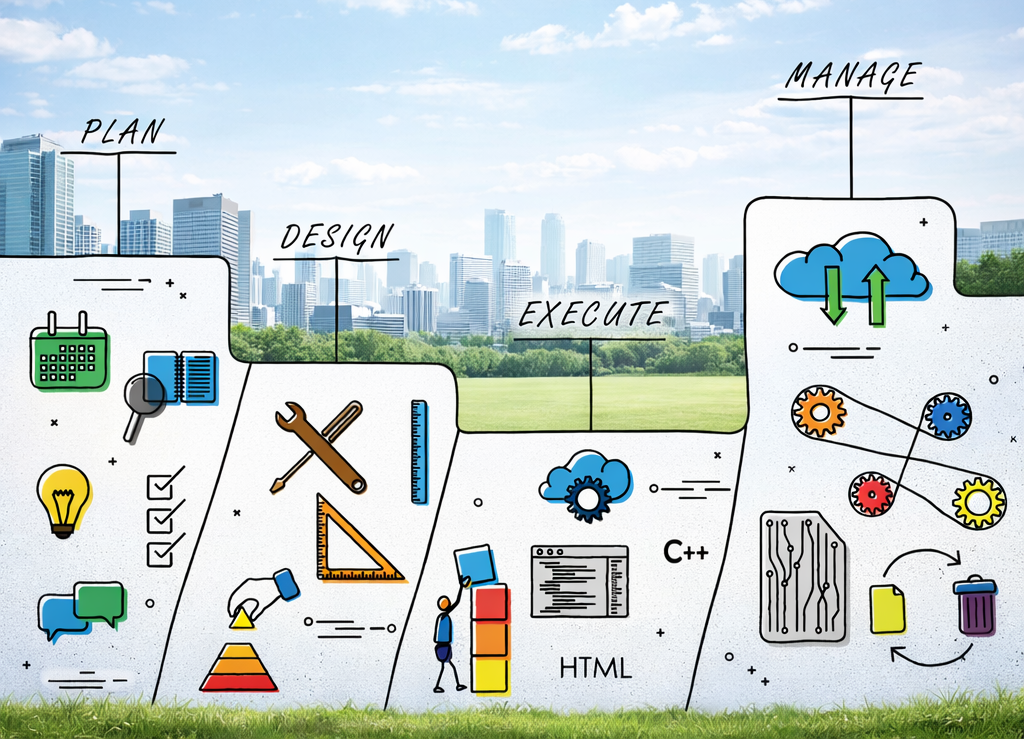
Establishing a digital presence in the modern era involves far more than merely launching a series of aesthetic pages; it requires a foundational architectural plan known as website blueprint strategies. Entrepreneurs often fall into the trap of focusing on visual trends while neglecting the structural integrity and psychological journey that lead to conversion. This lack of strategic foresight results in high-traffic websites that fail to generate meaningful revenue.
You should care about this topic because, as we approach the mid-point of this decade, the technical and competitive barriers to entry have never been higher. A haphazard approach to your digital assets will inevitably lead to obsolescence. By contrast, a meticulously planned site serves as a 24-hour salesperson, a brand ambassador, and a data-collection engine all in one.
This educational guide is designed to teach you the sophisticated nuances of digital architecture. We will explore how website blueprint strategies provide the necessary framework to support your commercial objectives, ensuring that every design choice and technical configuration contributes to your long-term success. Whether you are building from scratch or pivoting an existing platform, understanding these principles is the first step toward achieving genuine online market leadership in a crowded and noisy digital landscape.
What Are Website Blueprint Strategies?
To understand website blueprint strategies, one must view them through the lens of a master architect rather than a decorator. A blueprint is the comprehensive plan that defines the structure, functionality, and user experience of a website before a single line of code is written or a pixel is placed. It encompasses the information architecture, the content hierarchy, and the technical integrations required to meet business goals.
These strategies act as the connective tissue between your brand’s vision and the end user’s needs. Without a blueprint, a website is merely a collection of isolated pages; with one, it becomes a cohesive ecosystem designed for digital business growth. The process begins with deep research into user intent and competitor weaknesses, allowing you to build a platform that addresses market gaps effectively.
-
Sitemap Planning: Visualising the relationship between different pages to ensure logical navigation.
-
Wireframing: Creating low-fidelity skeletal structures that prioritise function and placement over aesthetics.
-
Technical Specifications: Outlining the necessary plugins, APIs, and hosting requirements to ensure performance.
According to research from HubSpot, user experience is a primary driver of retention. A strategic blueprint ensures that users find the information they need in the fewest clicks possible. This foundational work prevents “scope creep” and ensures that the final product remains aligned with the initial commercial intent. By following professional website planning tips, you avoid the costly mistakes of building features that your audience does not actually value.
Why Website Blueprint Strategies Matter in Modern Digital Strategy
In the fast-evolving world of 2026, the complexity of the internet demands a more disciplined approach to development. Website blueprint strategies are no longer optional; they are the primary differentiator between market leaders and those who struggle to remain visible. As search engines become more sophisticated, they prioritise sites that demonstrate clear topical authority and superior technical health.
A well-architected site supports your broader digital marketing efforts by providing a high-converting destination for your traffic. If your ad campaigns drive users to a site without a clear journey, you are essentially wasting your marketing budget. A blueprint ensures that your content marketing is distributed in a way that guides prospects through the funnel, from awareness to decision.
Furthermore, the Google Page Experience documentation makes it clear that technical vitals are crucial ranking factors. A strategic blueprint addresses these factors during the planning phase, ensuring that site speed, mobile responsiveness, and security are built into the core of the site rather than added as afterthoughts. This proactive approach is essential for achieving online market leadership.
Finally, having a blueprint allows for better scalability. As your business grows, you will inevitably need to add new features or content. A structured plan provides the “hooks” and framework to expand without breaking the existing user experience. This foresight is what separates a temporary project from a long-term digital asset that can sustain market domination for years to come.
Core Principles of Market Domination Strategies
To dominate a market, your digital presence must be superior to your competitors in three distinct areas: authority, utility, and trust. Website blueprint strategies must therefore be built on the principle of “Intent-Centric Design.” This means every element of the site is crafted to answer a specific question or solve a specific problem for the user. When you align your site with user intent, search engines naturally reward you with higher visibility.
Another core principle is “Data-Informed Evolution.” A blueprint should not be static; it should include mechanisms for tracking user behaviour and adjusting the strategy accordingly. By utilizing tools like Ahrefs to monitor keyword trends, you can update your blueprint to include new pages that address emerging market needs. This agility is a hallmark of successful market domination strategies.
-
Consistency in Branding: Ensuring that your visual identity is uniform across all sub-pages and landing zones.
-
Conversion Focus: Placing call-to-action elements in high-intent areas to maximise lead generation.
-
Accessibility: Building a site that is usable by everyone, regardless of their device or physical ability.
By adhering to these principles, you create a site that does not just “look good” but actually performs. You are building a digital fortress that protects your market share and discourages competitors from attempting to outrank you. This level of planning is the secret behind the most successful branding campaigns of the modern era, as it ensures the brand promise is delivered through a high-quality digital experience.
Common Mistakes Businesses Make in Website Planning
A frequent error in the digital space is the “Designer-First” approach. In this scenario, a business focuses entirely on the visual appearance of the site before considering the user journey or SEO requirements. This often leads to sites that are beautiful but functionally useless, as they fail to rank in search results or confuse visitors. Effective website blueprint strategies require that SEO and UX (User Experience) are considered from day one.
Another significant mistake is ignoring the competitive landscape during the planning phase. If you do not know what your competitors are doing well—and more importantly, what they are doing poorly—you cannot hope to achieve online market leadership. Failing to conduct a thorough gap analysis means you are likely building a site that offers nothing new to the marketplace, making it difficult to attract and retain an audience.
-
Over-Complicating Navigation: Creating menus that are so deep or complex that users get lost.
-
Ignoring Mobile Performance: Building a desktop-perfect site that breaks or loads slowly on smartphones.
-
Lack of Content Strategy: Launching a site with “placeholder” text rather than high-value, educational information.
Finally, many businesses fail to plan for the technical maintenance of their site. They treat the launch as the finish line rather than the starting point. Without a plan for regular updates, security patches, and performance checks, even the best website blueprint strategies will eventually fail. Tools like Screaming Frog should be used regularly to audit the site for broken links and crawl errors that could harm your market position.
Advanced Website Strategy 2026: AI and Personalisation
As we look toward the technical requirements of website strategy 2026, the integration of artificial intelligence and hyper-personalisation is becoming a critical component of any blueprint. Static websites are being replaced by dynamic platforms that change based on who is visiting. A visitor from a specific industry should see different case studies and headlines than a visitor from another sector, ensuring maximum relevance.
This level of sophistication requires a blueprint that incorporates advanced data structures and API integrations. For instance, your site might connect to a CRM (Customer Relationship Management) system to identify returning users and offer them content based on their previous interactions. This proactive approach is a powerful tool for digital business growth, as it significantly reduces friction in the sales process.
-
Predictive Search: Using AI to suggest content to users before they even finish typing their query.
-
Voice Search Optimisation: Planning content structures that answer natural language questions posed to smart assistants.
-
Dynamic Landing Pages: Creating pages that automatically adjust their layout based on the traffic source.
Implementing an advanced website strategy 2026 also means preparing for the “Cookie-less” future. Your blueprint must prioritise first-party data collection through high-value lead magnets and interactive tools. As Search Engine Journal frequently points out, businesses that own their audience data will be the ones that dominate their markets, while those relying on third-party tracking will struggle to maintain their reach.
Real-World Applications of Professional Website Planning Tips
To see website blueprint strategies in action, consider the transformation of a traditional service-based business. Initially, their site might have been a simple “About Us” page with a contact form. By applying professional website planning tips, they could pivot to an authority-based model. This would involve building a comprehensive resource centre, integrated booking systems, and a technical structure that supports local SEO.
The result of such a transformation is not just a better website, but a more efficient business. By automating the lead capture and scheduling process through the website blueprint, the business owners can focus on service delivery rather than administrative tasks. This is how strategic planning leads to tangible digital business growth, turning a digital expense into a profit-generating engine.
-
E-commerce Expansion: Using blueprints to manage complex inventory displays and secure checkout funnels.
-
B2B Lead Generation: Designing gated content paths that move prospects through a defined educational sequence.
-
Community Building: Planning for forum or membership areas that increase user dwell time and brand loyalty.
Successful applications of these strategies often cite authority sources like Moz or Neil Patel to validate their SEO and content decisions. By following the lead of industry giants and applying their techniques to your specific niche, you can create a blueprint that is both theoretically sound and practically effective. This commitment to professional planning is the hallmark of any company aiming for long-term market dominance.
How Digital Junkieee Helps Businesses Achieve Website Blueprint Strategies
At Digital Junkieee, we understand that the architecture of your website is the foundation of your entire digital future. We do not just build websites; we craft comprehensive digital ecosystems designed for online market leadership. Our process begins with a deep dive into your business goals, allowing us to develop website blueprint strategies that are perfectly aligned with your commercial objectives and the needs of your target audience.
Our team of experts provides high-performance website design that prioritises user experience and conversion. We ensure that your site is built on a technical foundation that meets the highest standards of the Google Page Experience documentation. Furthermore, our SEO services are integrated into the blueprinting phase, ensuring that your site is discoverable from the moment it launches.
-
Strategic Growth: We focus on digital marketing tactics that drive real revenue, not just vanity metrics.
-
Authority Building: Through content marketing, we help you establish your brand as the go-to expert in your field.
-
Technical Excellence: Our developers use the latest tools and techniques to ensure your site is fast, secure, and scalable.
Whether you need assistance with branding or a complete digital overhaul, our services are designed to help you dominate your market. We invite you to explore our blog for more insights or contact us today to discuss how we can create a custom blueprint for your business. Let Digital Junkieee be the architect of your digital success.
Future Trends: Website Planning Tips for a Competitive Edge
The future of digital dominance will belong to those who can master the “Immersive Web.” As we move deeper into 2026, website blueprint strategies will need to account for technologies like Augmented Reality (AR) and Virtual Reality (VR) integrations. For example, an e-commerce blueprint might include a “Virtual Try-On” feature, while a real estate blueprint could feature immersive 3D tours that go beyond simple video.
Staying ahead of these trends requires a commitment to continuous learning and technical adaptation. You must be prepared to update your website planning tips as new hardware and user behaviours emerge. The goal is to create a digital experience that is so useful and engaging that your competitors’ sites feel ancient by comparison. This is the essence of staying ahead in the race for market leadership.
-
Sustainability: Planning for “Green Web” practices that reduce the carbon footprint of your digital operations.
-
Privacy by Design: Building blueprints that prioritise user data protection as a core brand value.
-
Micro-Interactions: Using subtle animations and feedback loops to enhance the feeling of site responsiveness.
By monitoring industry leaders like Search Engine Land, you can stay informed about the latest shifts in search algorithms and consumer expectations. A forward-thinking blueprint is your best insurance against digital disruption. It allows you to anticipate changes and pivot your strategy before your competitors even realise the market has shifted, ensuring your position as a dominant force remains unchallenged.
FAQ Section
What is the role of website blueprint strategies in digital marketing? The role of website blueprint strategies in digital marketing is to serve as the functional foundation for all your online activities. Without a blueprint, your marketing efforts are fragmented and less effective. A blueprint ensures that your website is capable of handling the traffic generated by your ads, social media, and email campaigns. It creates a seamless journey for the user, moving them from initial interest to final conversion. By aligning your site’s structure with your marketing goals, you ensure a higher return on investment and a more consistent brand message. In essence, the blueprint is the plan that makes your marketing work.
How can small businesses implement market domination strategies? Small businesses can implement market domination strategies by focusing on “Niche Authority.” Instead of trying to compete with global giants on broad terms, a small business should use its blueprint to dominate a specific local area or a narrow product category. By providing the most in-depth, helpful content and the best user experience in that specific niche, a small business can achieve online market leadership within its own community. This involves using local SEO techniques, personalised service, and a high-performance website that builds deep trust with a specific target audience.
What tools help improve website blueprint strategies? Several professional tools are essential for creating and maintaining high-quality website blueprint strategies. For research and SEO, Ahrefs and Moz are invaluable for identifying keyword opportunities and tracking competitor performance. For technical audits, Screaming Frog is the industry standard for identifying crawl errors and site speed issues. For wireframing and design, tools like Figma or Adobe XD allow you to plan the user interface before development begins. Finally, Google Search Console provides direct feedback from search engines on how well your blueprint is performing in the real world. Using these tools ensures your strategy is based on hard data.
How does website planning tips help with digital business growth? Following professional website planning tips helps with digital business growth by ensuring that your primary digital asset is scalable, efficient, and user-friendly. A well-planned site reduces customer acquisition costs by improving conversion rates. It also lowers long-term maintenance costs by avoiding technical debt and broken code. When your website is built to support your growth, it can easily handle increased traffic and new product lines without requiring a complete redesign. This stability allows you to focus your resources on expansion and innovation rather than constantly fixing a broken website.
What is the connection between website strategy 2026 and user trust? In the landscape of website strategy 2026, user trust is built through transparency, security, and performance. A site that loads instantly, protects user data, and provides clear, authoritative information is a site that users will trust. Conversely, a slow, buggy, or confusing site creates immediate suspicion. Your blueprint must prioritise trust-building elements like SSL certificates, clear privacy policies, and verified social proof. As consumers become more aware of digital risks, they will gravitate toward brands that demonstrate a commitment to digital excellence and user safety. Trust is the currency of the digital future.
Conclusion
Mastering website blueprint strategies is the single most important investment you can make in your digital future. As we have explored throughout this guide, a successful website is not a happy accident; it is the result of meticulous planning, strategic foresight, and technical excellence. By treating your website as a structural masterpiece rather than a simple online page, you set the stage for sustained digital business growth and market leadership.
The strategies discussed here—from intent-centric design to AI integration—provide the roadmap you need to navigate the complexities of 2026 and beyond. Remember that the digital landscape is constantly shifting, and your blueprint must be flexible enough to evolve alongside it. Use the professional website planning tips provided to audit your current assets and identify areas for improvement.
Whether you are looking to refine your branding or implement advanced market domination strategies, the path to success begins with a clear plan. Digital Junkieee is here to support you in this journey, offering the expertise and services needed to transform your vision into a dominant digital reality. We encourage you to apply these lessons today and begin building the digital foundation that your business deserves.
0 Comments